Introduction
A great fantasy character deserves a name that feels like it belongs to his world.
Whether you’re writing a novel, creating a D&D character, developing an RPG, building a fantasy kingdom, or simply searching for an unforgettable fictional name, the right choice can establish personality and atmosphere before the character even speaks.
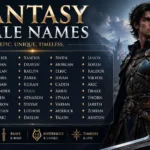
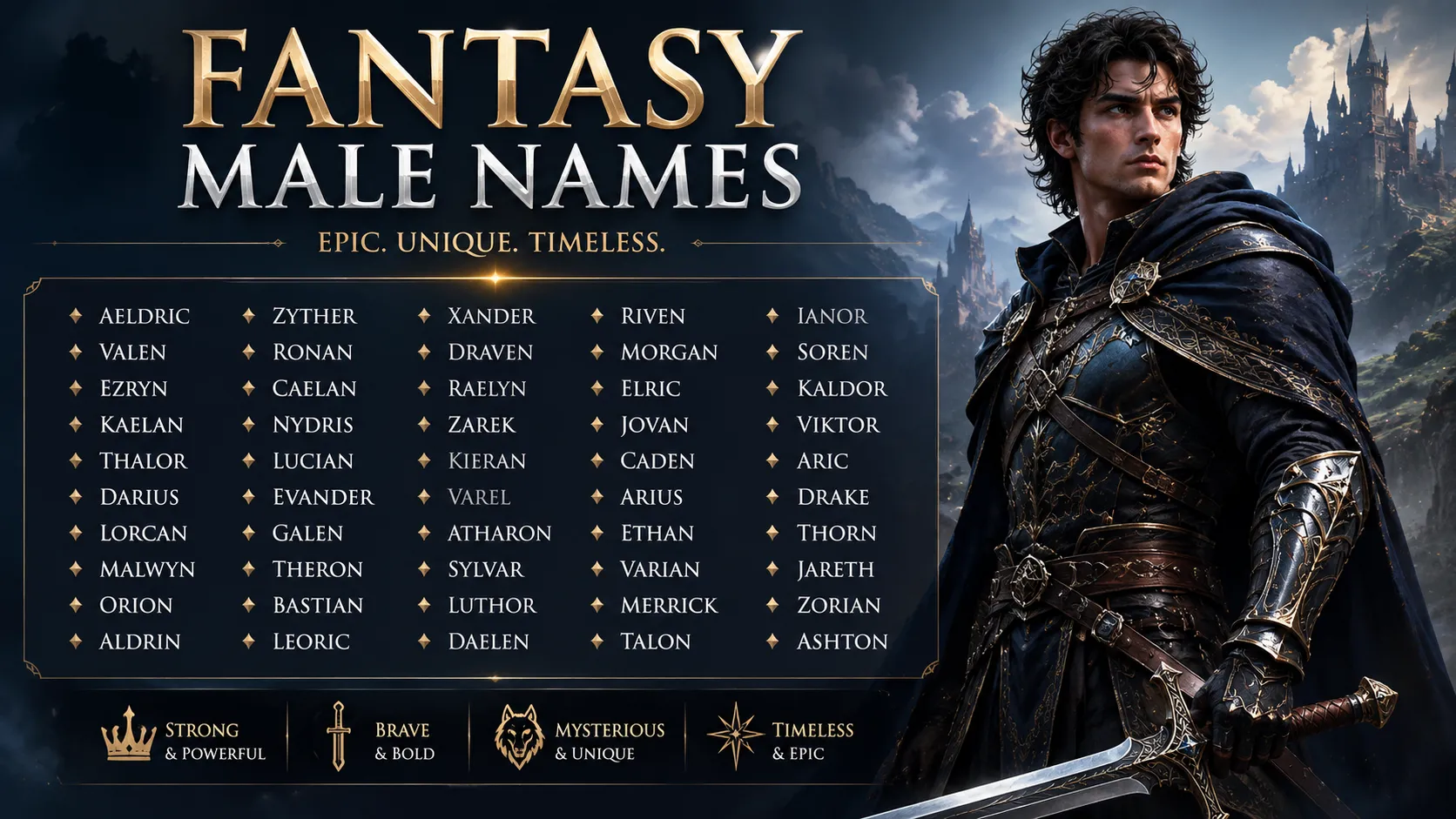
This collection of Fantasy Male Names brings together heroic, dark, magical, medieval, royal, mysterious, powerful, funny, and unusual ideas.
More importantly, it explains how to choose a name that fits your character instead of simply giving you an enormous list of random words.
Fantasy Male Names for Warriors, Wizards, Princes & Rogues
Instead of using the same name for every character type, match the sound to the role.
Warrior names
- Garrik
- Torren
- Kaedric
- Varik
- Branor
- Roderan
- Halric
- Tharok
- Korran
- Varek
Wizard names
- Aelorian
- Caelion
- Eldrion
- Vaelion
- Solarian
- Eryndel
- Alorien
- Miraven
- Zepharion
- Thaelion
Prince and king names
- Valerian
- Aurelian
- Cassian
- Evander
- Leorian
- Alaric
- Caelorian
- Hadrian
- Lucerian
- Emeric
Rogue names
- Riven
- Vex
- Kael
- Zarek
- Dax
- Varik
- Nyx
- Kade
- Rael
- Zorin
This character-role approach is one of the easiest ways to improve a fantasy name beyond simply choosing something that “sounds cool.”
Short, Funny & Unusual Fantasy Male Names
Not every character needs an epic royal name.
Side characters, tavern owners, merchants, goblins, comic-relief characters, and NPCs can benefit from lighter names.
Short fantasy names
- Kael
- Vex
- Ryn
- Tor
- Zek
- Dax
- Fen
- Korr
- Var
- Sol
Funny fantasy names
- Brumble
- Wobbin
- Gribble
- Pippik
- Noodlewick
- Bungo
- Tumblepot
- Fizzlebark
- Gobbleton
- Snorric
Unusual fantasy names
- Xevran
- Othryn
- Vaelix
- Quorin
- Zyven
- Pryndor
- Yavren
- Ixorian
- Uldrex
- Cevorin
A funny name works best when the character’s personality supports it. Otherwise, the name can feel like a joke rather than part of the world.
High Fantasy, Nature & Mysterious Male Names
Different fantasy settings call for different naming styles.
High fantasy names
- Eldarion
- Valthor
- Aranor
- Maelric
- Zevrin
- Kaedor
- Korrath
- Fendrel
- Tavarin
- Rynoth
Nature-inspired names
- Sylas
- Thorn
- Ashen
- Ronan
- Briar
- Kael
- Cedar
- Rowan
- Fenn
- Alder
Mysterious names
- Zephiron
- Nyric
- Drael
- Cyrath
- Velrin
- Vynar
- Zorric
- Myrren
- Orlen
- Nareth
Quick matching guide
| Character | Name style |
| Hero | Clear and memorable |
| Villain | Harder and darker |
| Wizard | Lyrical and unusual |
| Warrior | Strong consonants |
| Prince | Elegant and refined |
| King | Formal and authoritative |
| Rogue | Short and sharp |
| Druid | Natural and earthy |
| Ancient being | Long and ceremonial |
| Comic character | Playful and distinctive |
Fantasy Male Names With Meanings: What You Should Know
One of the biggest problems with fantasy-name lists is the way invented meanings can be Presented as if they were historical facts.
For example, a fictional name such as Vaelor can certainly have a meaning inside your fictional world, but that does not automatically mean “Vaelor” has a verified historical meaning in an ancient language.
Real or historically established names
Some names have documented origins.
Examples include:
- Alaric — historically associated with a Germanic name meaning “ruler of all.”
- Evander — a classical Greek/Latin name associated with “good man.”
- Valerian — derived from the Roman family name Valerius.
- Caelum — Latin for “sky” or “heaven.”
- Ronan — an Irish name traditionally associated with “little seal.”
- Rowan — associated with the rowan tree and also used as a personal name.
Fictional fantasy names
Names such as:
- Vaelor
- Eryndor
- Kaevon
- Malvorn
- Sylvarn
- Zepharion
can be treated as fantasy creations.
You can give them meanings within your own world:
Vaelor — “he who guards the northern gate.”
That is worldbuilding, not historical etymology.
This distinction makes your naming system more credible.
How to Create Your Own Fantasy Male Name
The best fantasy names are not necessarily the strangest ones.
They are names that feel as though they belong to the character, culture, and world.
Define the character
Before creating a name, identify:
- Role
- Personality
- Age
- Social status
- Culture
- Region
- Profession
- Moral alignment
- Family background
A young village healer should probably not have the same naming style as an immortal emperor.
Choose the sound
Think about the emotional impression you want.
Noble
Use softer and longer sounds:
Aurelian, Valerian, Evander, Caelorian
Dark
Use heavier consonants:
Mordren, Varketh, Korvath, Malvorn
Magical
Use flowing vowels:
Aelion, Elarion, Alorien, Vaelion
Warrior-like
Use strong consonants:
Garrik, Torren, Kaedric, Valric
Friendly
Use simpler sounds:
Arlen, Corin, Rowan, Kalen
Create a naming pattern
Worldbuilding becomes much stronger when names from the same culture sound related.
For example:
Kingdom of Aelor
- Vaelor
- Caelor
- Maelor
- Taelor
- Saelor
Northern warrior clans
- Branric
- Fenric
- Halric
- Torric
- Valric
Ancient mage order
- Aelorian
- Elandris
- Sylvaris
- Caelion
- Vaerion
Now the names feel like they come from the same linguistic tradition.
Add a surname
A first name becomes much more memorable when paired with an appropriate family name.
Heroic combinations
- Kaelen Dawnforge
- Evander Stormcrest
- Arlen Silvermere
- Theron Brightshield
- Soren Highvale
Dark combinations
- Mordren Blackmere
- Varketh Nightfall
- Malvorn Dreadspire
- Zareth Ashenborn
- Korvath Graveward
Royal combinations
- Valerian of House Aurel
- Caelorian Stormvale
- Evander Blackthorn
- Alaric Dawncrest
- Aurelian Highmere
Test pronunciation
Say the name aloud.
If you cannot pronounce it naturally after several attempts, your readers may have the same problem.
For important characters, simple pronunciation is usually an advantage.
Test it in dialogue
Put the name into an actual sentence:
“Kaelen, we have to leave before sunrise.”
Then try:
“Lord Vaelorian has entered the eastern gate.”
If the name sounds natural in dialogue, it is probably working.
Check originality
Before publishing a novel, game, comic, or commercial project, search the exact name.
A name can sound original while already being strongly associated with another fictional character, franchise, company, or real person.
For commercial projects, check trademarks and relevant intellectual-property issues where appropriate.
How to Choose the Perfect Fantasy Male Name
Before making your final choice, ask:
- Does it fit the character?
- Does it fit the setting?
- Is it easy enough to pronounce?
- Is it memorable?
- Does it sound different from the other characters?
- Does it match the character’s social status?
- Does it fit the culture?
- Can readers spell it reasonably?
- Does it work in dialogue?
- Does it still sound good after repeated use?
If the answer is yes to most of these questions, you probably have a strong name.
People Also Ask
Some versatile choices include Kaelen, Vaelor, Theron, Eryndor, Aldric, Riven, Evander, Corvin, Caelan, and Tavian.
Good warrior-style options include Garrik, Torren, Kaedric, Varik, Valric, Fenric, Branor, Korran, Tharok, and Varek.
For villains or dark characters, consider Mordren, Malvorn, Varketh, Korvath, Zareth, Morvane, Draxen, Noctren, Veylorn, or Vorgrim.
Mystical options include Aelorian, Caelion, Eldrion, Vaelion, Sylorien, Zepharion, Alorien, Elarion, Thaelion, and Miraven.
A good fantasy name should fit the character’s personality, culture, role, and setting while remaining memorable and reasonably easy to pronounce.
They do not have to. A fictional name can gain meaning through your story, mythology, culture, family history, or character arc.
Conclusion
A fantasy name is more than a label. It can establish a character’s identity, culture, history, personality, and even readers’ Expectations. Warrior may need a strong, compact name. A wizard can benefit from something lyrical and mysterious. A prince may require an elegant name, while a villain might need something darker and more imposing.
The strongest approach is to combine character + culture + sound + setting.
Use the lists above for inspiration, experiment with first-name and surname combinations, and create naming patterns that make your fictional world feel consistent. The goal is not to find the strangest name possible.